Dr Paul Kilkenny · medical doctor (GP) and tutor

They understand it when the teacher explains. Then the question changes.

Can your child
explain it back?

Live GCSE teaching with Dr Kilkenny for under £6 per hour.

Six subjects · eleven live hours a weekAbout £58 a week — billed monthly at £249 per student

Your child learns each topic live with Dr Paul Kilkenny — a medical doctor whose explanations have made hard ideas make sense to pupils for more than thirty years. Then they explain it back on a question they have not seen, and Academic MRI’s questioning works on whatever has not yet clicked.

A free 60-minute small-group lesson. Parents welcome.

MathsEnglish LanguageBiologyChemistryPhysicsEnglish Literature

Eleven hours of live teaching every week, all taught by Dr Kilkenny — two hours per subject, one for English Literature. Explore the Unusually Clear A3 Duos

English Literature — built around the texts your child actually studies Weekly teaching with Dr Kilkenny · set-text A3 Duos · recorded lessons · Explain It Back sessions with Academic MRIWhy revise somebody else’s books? How it works ↓
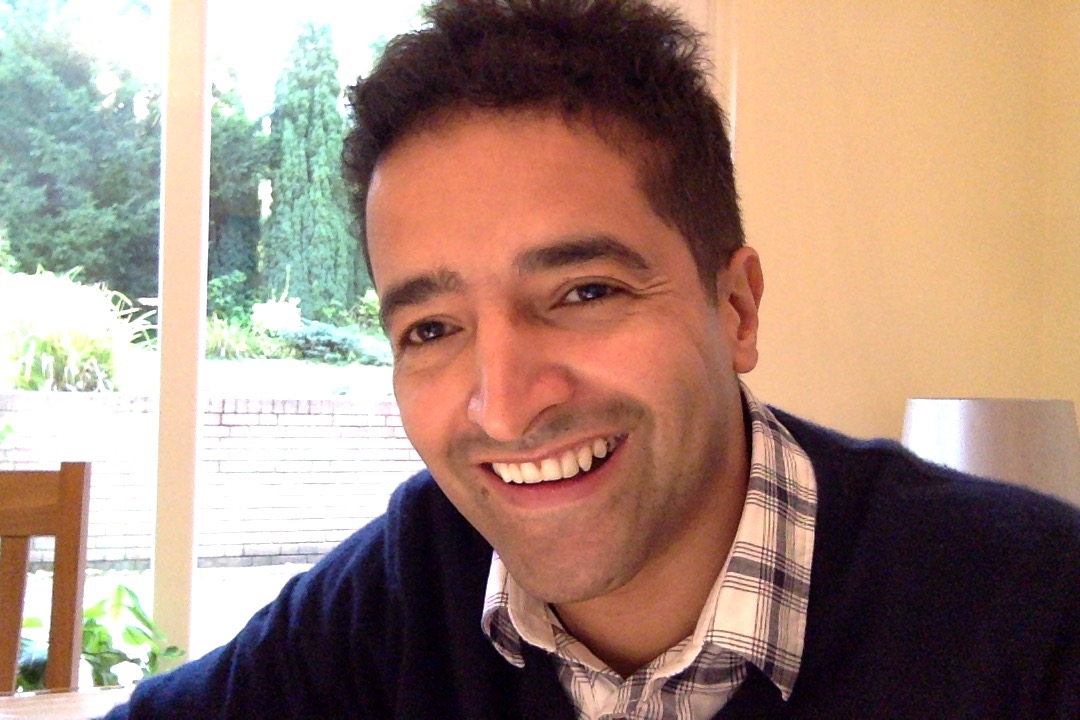
Dr Paul Kilkenny, smiling, seated beside a garden window

Dr Paul Kilkenny

Medical doctor (GP) and tutor · MBBS, MRCGP, BA (Hons)

GMC registration no. 7403005 — verify on the GMC register. As a practising doctor he holds enhanced DBS clearance and is on the DBS Update Service.

  • Dr Kilkenny has taught hundreds of pupils over thirty years.
  • Explains hard ideas through real-world examples, with patience and encouragement — pupils describe topics they had given up on becoming clear.
  • Teaches every live lesson himself, across all six subjects.

“The only way I can describe him is an utter miracle worker!”

Lulu, former Biology pupil · read why she said it

Experience the teaching — book your free Fix-It Clinic →

“He was able to turn topics that she feared into ones that she hoped she would be questioned on.”

RobinParent of a former pupil

Three promises from Dr Kilkenny

Join with confidence.

Join in November or December

Join in November or December and get a personal one-hour one-to-one exam strategy session with Dr Kilkenny. Whether mocks are still to come or the results are already in, your child leaves with a written plan for the exams ahead.

Your fee stays at £249 for as long as you remain a member.

Join by 31 December 2026. One session per pupil, booked from published availability; sessions are available from Monday 7 December.

My personal money-back guarantee

“Try Explain It Back for a month. If you don’t think this is the clearest and most memorable teaching your child has ever had, I’ll refund your first £249 payment in full. No questions asked.

Simply let me know within the first 30 days of your paid membership.”

— Dr Paul Kilkenny

The full guarantee and how to claim

No break for the Christmas holidays

No break for the Christmas holidays. Lessons run to the normal timetable throughout, apart from Christmas Day and Boxing Day, so mock revision doesn’t stall. Miss a lesson and the recording is there the same evening.

Sample documentWhat a one-hour exam strategy session producesSee the plan
Explain It Back Limited · explainitback.com

GCSE Exam Strategy Plan

Prepared after a one-hour, one-to-one session via Zoom · illustrative example

Sample
Pupil
Sam (illustrative)
Year
11
Exams
May–June 2027 · AQA Combined Science (Higher), Edexcel Maths (Higher), AQA English Language & Literature
Prepared by
Dr Paul Kilkenny

1. Where Sam is now

Sam follows explanations in class and does well on questions that look like the worked example, but loses marks when the question is set differently — most clearly in Chemistry calculations (moles) and in six-mark Biology “explain” questions. Maths is secure on method and weak on checking. English Language answers show good ideas but spend too long on the first question.

2. What matters most between now and the exams

  1. Chemistry — moles and reacting masses. Rebuild from the relationship (mass ÷ relative formula mass), not the triangle. Explain It Back weekly until Sam can take a new question cold.
  2. Biology — extended answers. Practise the “because… therefore…” chain on one six-marker a week, spoken first, then written.
  3. Maths — checking. Two minutes at the end of every paper: units, reasonableness, re-read the question.
  4. English Language Paper 1 — timing. Twelve minutes on question 2, no more.

3. The plan, week by week

WeeksFocusHow we’ll know it has stuck
1–3Moles from first principles; one six-mark Biology answer a weekFresh moles question explained back without prompting
4–6Rates and equilibrium; Maths checking routine; Paper 1 timingTimed Paper 1 question 2 in 12 minutes with the marks
7–10Past-paper rotation across subjects; weekly retention checksEarlier topics still explained correctly weeks later

4. At home

Sam needs a quiet fifteen minutes after each lesson for the Explain It Back session, headphones on. Nothing else to chase: the Friday report will tell you what was explained independently and what still needs help.

This is an illustrative plan for an example pupil, not a prediction of grades. Your child’s plan is written from your session.

Sample documentWhat your Friday report looks likeSee the report
Explain It Back Limited · explainitback.com

Friday Report

Week ending Friday 18 December 2026 · read and approved by Dr Kilkenny, 18 December 2026 · illustrative example

Sample
Pupil
Sam (illustrative)
Lessons attended
Maths ×2 · Chemistry ×2 · Biology ×1 · English Language ×1
Explain It Back sessions
2 of 2 completed (Monday 14 December, Tuesday 15 December)

What Sam could explain on their own

  • Chemistry — moles: worked out the mass of 0.25 mol of magnesium oxide from first principles and explained why, unprompted. Secure
  • Maths — factorising quadratics: factorised and solved a new equation; explained the sign rule correctly. Secure

Where help was needed

  • Biology — enzymes: described denaturation but said the enzyme “dies”; with one question, rebuilt the idea as the active site changing shape. Improving

What we do next

Next week’s Explain It Back returns to enzymes with a fresh question before moving on, and checks moles again in three weeks to see what has stayed.

Written from Sam’s own Explain It Back sessions and approved by Dr Kilkenny before release. Never a grade, never a prediction. Illustrative example, not a real pupil.

The programme · GCSE Explain It Back membership

Eleven live hours a week with a teacher who makes difficult ideas simple to understand and easy to remember.

Six subjects, all taught live by Dr Kilkenny — and English Literature tailored to your child’s own texts. One membership; everything included.

Original artwork: a translucent blood vessel carrying pale, warmly lit red blood cells
Biology · Blood vesselArtistic interpretation
  • Live teaching in six subjects — eleven scheduled hours a week: two lessons a week — one teaching the topic, one putting it to work on exam questions — for Maths, English Language, Biology, Chemistry and Physics, and a weekly English Literature lesson — on different days, the same times every week.
  • Every lesson recorded the same evening, with notes, a revision card, a 30-question quiz with answers, exam questions and worked solutions — available until 31 July each year.
  • Two Academic MRI sessions a week, fifteen minutes each, at a time that suits — Academic MRI is the AI-powered learning engine behind Explain It Back. Dr Kilkenny prompts students to begin after live lessons; English Literature students also complete a separate weekly session on their set texts. Your child explains a question they haven’t seen, and the questioning starts the repair on the spot.
  • A Friday update for you — what clicked, what needed help, what next. Attendance certificates posted home; a monthly parents’ hour with Dr Kilkenny on Zoom.

Under £6 per hour of live GCSE teaching

Equivalent weekly cost: about £58 a week

Billed monthly at £249 per student

Your first week is for settling in. Your child joins the live lessons from Monday 7 December 2026, and we set up their Explain It Back account with you: your consent, their own login and a quick microphone check. Explain It Back sessions with Academic MRI begin on Monday 14 December, and your first Friday report follows on Friday 18 December.

Joining opens on Friday 4 December at 7 p.m. Until then, come to a free Fix-It Clinic and see how Dr Kilkenny teaches.

Book your free Fix-It Clinic

Hourly and weekly figures are average equivalents based on the full live teaching timetable included in membership. Membership is billed monthly.

Live teaching starts Monday 7 December 2026. Everything above, included — nothing is added later. Monthly. Cancel at the end of any month. No tie-in. And when you join, you have the legal 14-day right to cancel for a full refund.

Live teaching starts Monday 7 December 2026

The full programme, week and terms

Timetable, a typical lesson, what arrives after each one, the Friday update in full, and the terms.

When your child gets stuck, what happens next?

The questioning doesn’t just find the gap. It repairs the misunderstanding and closes it.

Teach it. Explain it back. Work through the gap. Prove it on a new question. Check it later.

Here is one pupil, one question they hadn’t seen, and the exact moment the explanation gave way — and what we asked next. The session is a fifteen-minute Academic MRI session — Academic MRI is the AI-powered learning engine behind Explain It Back — completed at a time of the pupil’s choosing; an illustrative example, not a real pupil.

This week’s difficulty shapes next week’s questions. See how a week fits together →

Every record keeps two things apart: how much help was needed — independent, prompted or shown — and how secure the idea looks over time. Never a grade, never a prediction.

Follow one encounter, step by step — an illustrative Enzymes example

Illustrative exampleGCSE Biology · Enzymes · taught in the lesson: how heat denatures an enzyme

  1. A question they haven’t seen

    Academic MRI“Pepsin works in the stomach at about pH 2. Why does it stop working when food passes into the small intestine, at about pH 8?”

    Not the taught example. The same idea, somewhere new.

  2. Their explanation, in their own words

    Pupil“The alkali kills the enzyme, so it can’t break down protein any more.”

    First attempt. No help yet.

  3. The point of difficulty

    Pupil“The alkali kills the enzyme, so it can’t break down protein any more.”

    The outcome is right; the mechanism is missing. Nothing links the change in pH to the shape of the active site. “Kills” earns a question — it is not assumed to be a misunderstanding.

  4. The questions that start the repair

    Academic MRI“What holds an enzyme in its shape?”

    Pupil“Bonds — between parts of the protein.”

    Academic MRI“And what does a very different pH do to those bonds — and so to the active site?”

    Pupil“It disrupts them… so the active site changes shape and the substrate doesn’t fit.”

    The questioning is the help. Aimed at the missing link, not the whole topic — the repair starts here, not in a report.

  5. The explanation, rebuilt

    Academic MRI“Now say the whole method again from the start.”

    Pupil“The pH change disrupts the bonds holding the enzyme’s shape, so the active site changes and the substrate is no longer complementary — pepsin stops working.”

    Two hints were needed to get here, so the record says prompted — not independent.

  6. A new question, no help

    Academic MRI“A biological washing powder removes stains at 40 °C but not in a 90 °C wash. Explain why.”

    Pupil“The heat breaks the bonds holding the enzyme’s shape, the active site changes and the substrate can’t fit — it’s denatured.”

    Recorded as independent · This week’s judgement: Improving — right on a new question after repair; not yet shown unaided at a first attempt.

Later check: not yet made The next Biology Explain It Back opens by returning to this idea. One good answer is not proof that it has stayed — so we check. See how this reaches you in the Friday update →

Original artwork: a cluster of alveoli rendered as translucent, warmly lit spheres at the end of a fine airway
Biology · AlveoliArtistic interpretation

GCSE tuition. Progress you can see.

What your child could explain, where they needed help, and what we tackle next.

Friday update Illustrative example

Biology — enzymes and denaturation prompted

Explained without help
That a change in pH stops pepsin working.
Needed two hints
Linking the pH change to the shape of the active site — the enzyme was described as “killed”.
Next practice
Explain denaturation for a new enzyme without prompts.
Checked again later
Not yet — this idea comes round again in a later session.

See a full Friday update →

English Literature · taught live · included

English Literature.
Taught simply, memorably and thoroughly
by Dr Kilkenny — tailored to your child’s texts.

Not every child studies the same books, plays or poems — so why should yours spend revision time on a text they won’t be examined on? Every week Dr Kilkenny teaches the skills of GCSE English Literature live. Alongside that, your child builds a personalised collection of A3 Explain It Back Duos for the texts they are actually studying — each linking to his recorded lessons on that text — and practises with an Academic MRI Explain It Back tutor that challenges their understanding.

Taught live by Dr Kilkenny each week · personalised to your child's set texts Included with membership · live weekly · access from the programme start date

How English Literature worksLive expert teaching · personalised A3 revision resources · Dr Kilkenny’s recorded lessons · individual Explain It Back practice

  • Learn live. One hour a week with Dr Kilkenny on the skills every Literature exam rewards.
  • Their own texts. A3 Duos for your child’s set play, novel and poetry — not somebody else’s books.
  • A growing collection. Over six months, the Duos build into a physical revision collection worth keeping.
  • Scan and watch. Each Duo’s QR code opens Dr Kilkenny’s recorded lessons on that text — unlimited replays.
  • Explain it back. A separate weekly Academic MRI session on their own set texts, questioning them and strengthening their reasoning.
  • Revisit and retain. Later questions check what still holds — and the Friday update tells you.

Who teaches

Thirty years of making hard subjects make sense.

What pupils and parents describe, again and again: explanations that connect to the real world, patience, and topics that once felt out of reach becoming understandable — sometimes in a single session.

“Dr Kilkenny’s expertise and teaching style made complex topics easy to grasp.”

Sophia D-LFormer GCSE pupil

Why families choose him

  • A doctor’s way of teaching. A GP by training: listen carefully, look beyond the first answer, find what is actually going on — then explain it in a way that lands.
  • Unusually clear explanations. A simple starting point, then what follows from it, then the harder case — and when a pupil hesitates, back to the step they already understood. Meaning first; precision and practice built on it.
  • Patience and encouragement. Parents describe a calm approach — and children who grow more confident with every new topic.

“Paul is an exceptional tutor — not only because of his outstanding teaching skills but also his deep sense of empathy and care.”

CeydaParent of a GCSE Physics pupil

Ten accounts from pupils and parents, in the writers’ own words — read the full collection.

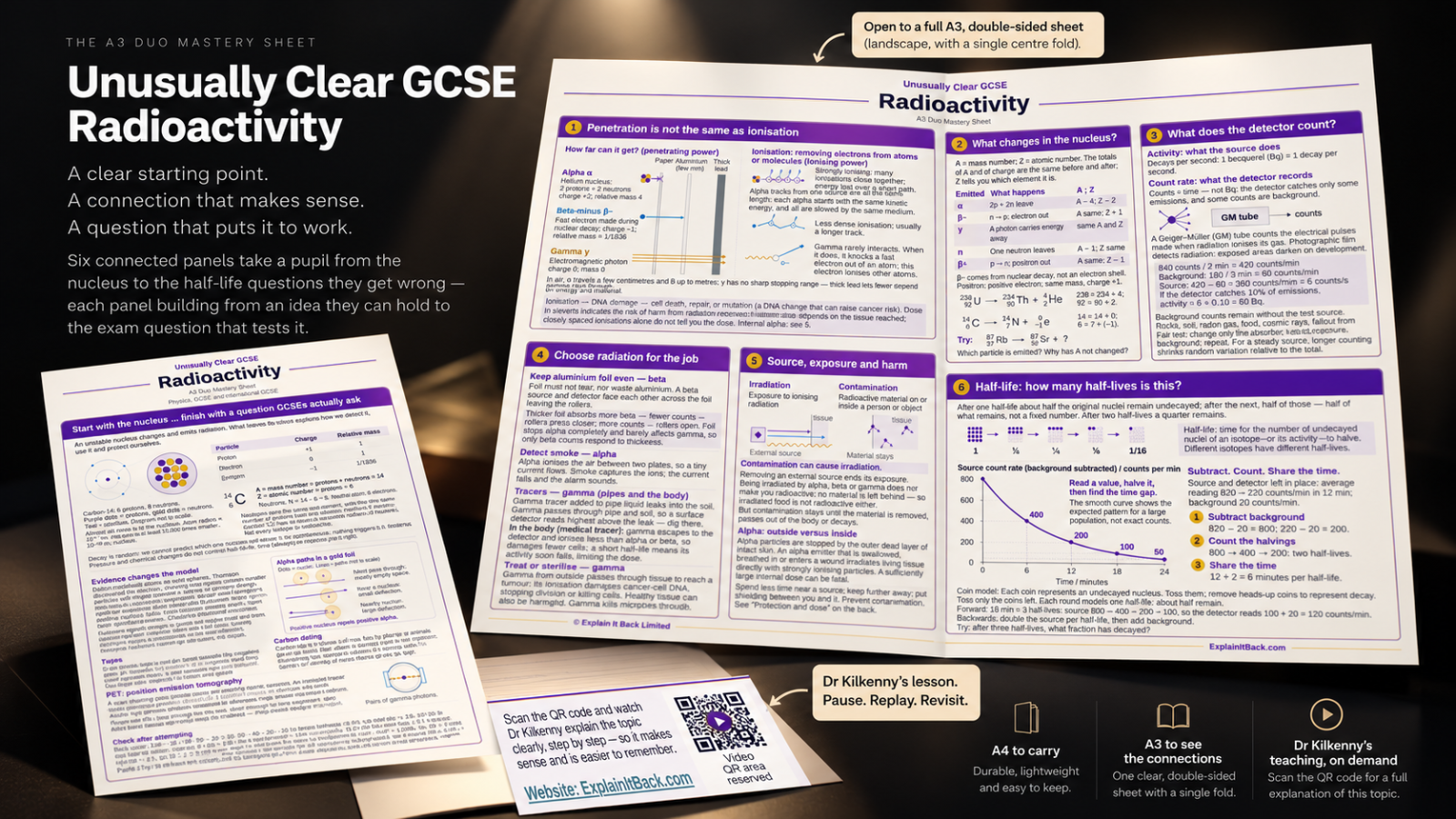
Unusually Clear GCSE Radioactivity — A3 Duo Mastery Sheet shown closed, open and from the back
Unusually Clear GCSE Radioactivity — the first approved A3 Duo. Front, open A3 spread and back

Included in the programme · Unusually Clear A3 Duos

A4 to carry. A3 to see the connections.

Unusually Clear A3 Duos for selected topics across all six subjects—included in your GCSE Explain It Back programme — about £58 a week (billed monthly at £249 per student).

Maths · Biology · Chemistry · Physics · English Language · English Literature

Dr Kilkenny’s explanation of the whole idea on one fold-out spread — learn it in the lesson, see the connections on the sheet, apply it, and revisit it when revision comes round. Scan the QR code and watch Dr Kilkenny explain the topic clearly, step by step—so it makes sense and is easier to remember.

Printed on Xerox Premium NeverTear paper — waterproof, tear-resistant and wipe-clean.

  • An Inspector Calls
  • Radioactivity
  • Moles
  • Inheritance
  • Electricity & Circuits
  • Macbeth
  • Unseen Reading

Unusually Clear A3 Duos accompany selected topics across all six subjects and are supplied in course-linked packs as the collection develops.

Experience the teaching

Book your free Fix-It Clinic.